All Top Banking

Showing posts with label Online shopping. Show all posts

10 Tips to Secure Online Shopping that You Won't Need to Know!

Posted by John B. Frank Tuesday, October 7, 2008 0 comments

Editor's Note: Before you read this story about 10 tips to prevent hackers from getting your card information when shopping online, I should let you know that ultimately, practicing these tips won't protect you. I will however, show you a simple and logical way to make your online transactions exponentially more secure...ultimately providing you and yours with the peace of mind so many online-shoppers lack, yet desire. Here's how...

Simply place an order for a HomeATM Personal Swiping Device, and you won't ever have to worry about the following 10 tips designed to "help" protect your identity when shopping online.

Even if you were to memorize and practice the art of using all 10 of these tips, you are NOT going to be protected when shopping online. You'll be more protected, but not fully protected. But there is a way to fully protect you when you shop online.

It's simple...compare the two choices:

Choice One (current method):
Think about it. Does any part of your mind, intuition, thought process, knowledge, etc. think this is a safe way to purchase anything online? Then why would you enter your card information including your card number and expiration date into a box on a website and then worry hacker will see your data or break into the the retailers system in the future, steal your data and wipe out your bank account?

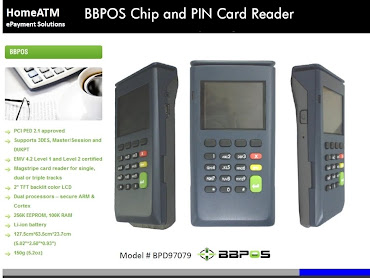
Choice Two (Our Way): For the cost of shipping and handling, we'll send you our SwipePIN device and you can process your purchases online the same way you do it in retail stores.

Simply take out your card and swipe it yourself in the safety of your own home. See the numbers on the PIN pad? Yes, it even allows you to further secure the transaction with your PIN. (all data is fully encrypted). You should be "SwipePIN your Slider"


This globally patented platform brings the Point of Sale device Home...where the Point of Sale occurs. Better yet, (and here's our direct response TV commercial pitch) "Try HomeATM's SwipePIN device at home FREE for 90 days...just pay shipping and handling ($5.00) and if you're not completely convinced it's the most secure way to make your online purchases, let us know and we'll deactivate it. Otherwise, use it to send us $5.00 dollars for a total cost of only $10.00! You can now shop online safely, securely with the knowledge that both your card and card reader are hack and skim free, respectively. (You can also rest assured it hasn't been tampered with)

Until you start using the SwipePIN method, consider these tips to reduce your risks. But remember, there's keyloggers, hijackers, screen scrapers, hacktivists, wardrivers and myriad other threats that these tips don't protect you against.

Credit Card TheftTen Online shopping tips to protect your identity
This holiday season many online shoppers wanting to avoid the hassle of visiting crowded shopping malls will look to the web as a quick and easy to purchase gifts for friends and loved ones. Although the number of Canadians shopping online continues to grow, there are still many consumers who won't shop online for fear they could be victims of identity theft.

The truth is that identity theft is a relatively rare occurrence and most identity theft occurs in using low tech off-line methods therefore most experts agree that shopping online is very safe provided consumers use some common sense when shopping online.

To help make shopping online more safe and secure, Digital Home presents the following Ten Tips for Secure online holiday shopping:

1. Only provide personal information if you're on a secure Web site. Once you are logged in, make sure the Web address starts with "https"("s" means it's secure). For added safety, check for a site certificate before submitting information on a secure page. Confirm the owner of the certificate by clicking on the padlock icon at the bottom of most browsers. You should see the owner listed as well as the site address. This address should match the Web site address at the top of the page; if they do not match, you may be at a fraudulent Web site and should not enter personal data.

2. Never respond to emails asking you to "confirm" recent transactions after you shop. These likely are "phishing" scams sent to lure private information from you.

3. Maintain a paper trail. Print and save records of your online transactions, including the product description and price, the online confirmation/receipt, and copies of any email(s) you exchange with the seller.

4. Do not share your passwords with anyone and never provide your social insurance number, birth date, or mother's maiden name in an email.

5. Make sure all of your security software is up-to-date before you do your online shopping. That includes anti-virus software, anti-spyware, and firewalls.

6. Check a company's privacy policy before doing business with it. A company should allow you to know what personal information its Web site is collecting, why and how it will be used. If you can't find a privacy policy -- or if you can't understand it -- consider taking your business to another site that's more security-conscious and accommodating to customers.

7. Consider using a separate email account for your online shopping. You can set up a free email account online through several different services.

8. Check your bank and visa accounts regularly for any activity you did not initiate. This is especially needed during the busy holiday shopping season. You should be able to log on quickly and check to see if there is any unusual activity in your bank or credit card account that you did not initiate. If there is, contact your bank immediately.

9. Do business with companies you know and trust. Research a company before revealing personal or financial information online. Confirm an online seller's physical address and phone number in case you need to get in touch with them. If you get an email or pop-up message from the seller while you're browsing that asks for financial information, don't reply or click on the link in the message. Legitimate companies don't ask for this information via email or pop-ups.

10. Watch out for fake "look-alike" sites. Some con artists disguise their Web site as a well-known company's site. Check your browser's address bar to make sure you're always using the correct Web site address. If the Web site seems suspicious, leave it immediately and call the company.

Finally and perhaps the most important piece of common sense when shopping online is one that is true when shopping offline - Never let anyone see your card numbers and never hand your card over.


Reblog this post [with Zemanta]

Who's Afraid of the Big Bad Web?

Posted by John B. Frank Thursday, September 11, 2008 0 comments

With the price of fuel hovering at all time highs, many people have started counting the cost of the "shopping expedition" as well as the price of merchandise.

This has created the beginnings of a paradigm shift in the behavioral pattern of consumers and how they shop for goods.

Recent stories raising consumer awareness on the potential of becoming a victim to card cloning, card skimming, Wardriving, etc. etc. only adds to the momentum to forces driving consumers to shop online.

After all, online shopping literally eliminates the fuel factor, having one's own personal swiping device complete with PIN Entry capability virtually eliminates the potential for fraud and e-Commerce pricing usually beats anything found in bricks and mortar locations...and it always will. It simply costs less to provide an outlet of goods online and in the competitve landscape of such a world, those savings are passed on to consumers. In fact, according to an article published today in Red Orbit entitled: Sale of the Century Bargains are one of the biggest allures online retailers have to offer. Here's an excerpt:

"
Part of the internet's popularity is down to its reputation for being the easiest place to bag a bargain. Falling broadband costs, a greater familiarity with e-shopping and increasing online offers mean it looks set to thrive, even against the backdrop of the credit crunch. In fact, online shoppers are buying more regularly than ever before: an average of 16.9 times each per year, an increase of 2.7 purchases each in 2006. This continues to force retailers of every type and size to use the format as part of the way they do business".

Thus, e-Commerce is booming worldwide, not just here in the States.

Therefore it is critical that companies begin to look at how to use the internet to drive sales. Not only should companies utilize the internet for marketing purposes, but they should look at it as a critical sales channel. The numbers speak for themselves. This is not a trend. It is truly a paradigm shift.

Consumers armed with high-speed access and positive online retail experiences are increasingly comfortable shopping online. Metrical analysis of the United States and Europe show trends of increased spending in online retail from last year, and the rate of transition from traditional to online shopping isn't showing signs of slowing down anytime soon. In fact, it's outpacing bricks and mortar, while percentages of online shoppers increase. (see "related stories" below)

e-Commerce is expected to boom for the next 5 years. I say longer. I say paradigm shift.

I say that the web is retail's big bad wolf and it's gonna huff and puff and blow some houses down. Bricks...and...mortar...and... all....oh my.

Kudos to the company that houses the global patent on bringing PIN Debit to the web in a browser environment! It's the most popular and fastest growing payment platform in the bricks and mortar world and has yet to take a foothold in the online payments space. That's about to change however and online retailers will jump at the opportunity to significantly reduce their payment processing costs, risk management, chargebacks and increase the security of the transaction. It's not if, it's when. Period.


Related articles by HomeATM PIN Debit Blog

Venture Capitalists Find Fertile Ground with ePayments

Posted by John B. Frank Thursday, September 4, 2008 0 comments

Bringing PIN Debit to the Web is one of the last frontiers for e-payments. It's hugely popular in the bricks and mortar world, more secure than the current platform, and because of that security, enjoys interchange fees that are SIGNIFICANTLY lower...quite an enticing proposition for Internet Retailers. Previous attempts to bring PIN debit to the web have proved futile...HomeATM's prospects are nothing but fertile... Here's a recent article from eCommerce Times discussing why:

E-Commerce: Fertile Ground for Venture Investors
By Kevin Kemmerer, E-Commerce Times


Even in a down economy, there is money to be made for those who know where to look. One such area of golden opportunity is the e-commerce sector. Many of the same factors that are dampening consumer spending in the brick-and-mortar world -- gas prices, for instance -- are driving shoppers online, notes Safeguard Scientific SVP Kevin Kemmerer.

The U.S. economy is in a funk, but that doesn't mean opportunities for venture investors have dried up. E-commerce is one sector that will see continued growth opportunities even in an economic downturn.

In fact, industry observers say growth and revenue opportunities for e-commerce ventures -- such as alternative payment options, are as attractive as ever.

Trends Converge

It's also a global industry, unrestrained by borders
.

As the number of Internet users around the world rises, so too does the number of Internet shoppers and the amount they spend.

E-commerce remains appealing to consumers and interesting to VCs for several reasons. Increased Internet adoption, low-cost broadband, ubiquitous smartphones, increasingly sophisticated e-marketing technology and stronger security are driving consumers to shop online.When they shop, they typically find the goods they want at prices that local retailers find hard to beat. Better still, orders are delivered to consumers' doors for much less than the cost of a tank of gas.

It's a perfect competitive mix for today's current economic environment.

Fueling this rising tide are innovative companies that are identifying unmet needs (PIN based transactions are extremely popular in the bricks and mortar world.) or technological gaps in the global e-commerce infrastructure -- and then filling them with sophisticated new services or technologies. Some of the areas of highest activity:

* Security


Consumers lost a total of US $49.3 billion to identity theft last year, and the figure continues to climb. Online businesses are under increasing market and legislative pressure to keep shoppers' information safe. The opportunity for tech companies is to develop superior techniques for keeping sensitive information out of the hands of cyber-thieves. Clearly, conventional tools for dealing with viruses, phishing attacks, spyware and other malicious software aren't doing the job. Demand from consumers, merchants and financial institutions is sustaining healthy investment opportunities in young companies with a focus on security. (Editor's Note: PIN based transactions are the most secure transactions)

* New payment methods


With U.S. consumer debt at all-time highs, adjustable-rate mortgages squeezing homeowners, and food and fuel prices setting records, consumers are more willing than ever to consider alternative ways to pay.

This goes double for merchants, who are competing aggressively for buyers' loyalty and dollars.

That's opening doors for technology innovators, who are rolling out alternative payment systems that are interest-free, incentivized, more secure than credit cards, or all of the above.

PayPal was an early entrant into this space, but the success of firms like BillMeLater indicates that there's still plenty of room for innovation. (Editor's Note: Exactly why HomeATM has spent the last 8 years designing, testing, and now ready to release it's Internet PIN Debit Platform!)


This represents an interesting area for investors looking to get a piece of the multibillion dollar payments industry.

Javelin Strategy and Research forecasts that online debit payments will grow to $93.9 billion by 2012, see chart on right

Editors Note
: One of the last frontiers for innovation in the payments space is... unarguably...web-based PIN debit. Here's why...along with links to various articles/posts explaining each...

The article continues:

* Advertising technology

Internet advertising represents just 10 percent of global ad expenditures. Even so, that makes it a $21 billion industry -- one that's growing faster than any other advertising sector. Advertising as a whole is transitioning from print, radio and television to the Internet. This is a major media shift, and it will create great opportunity for startups all along the marketing infrastructure portion of the value chain. This will be most notable in the technology that facilitates more sophisticated targeting of ads. While analyst forecasts of the near-term online ad market vary, there's no doubt that the upside, in the long term, is huge.

Instability in major areas of the U.S. economy is certainly cause for concern, but that doesn't mean venture capitalists are rolling up their welcome mats and bolting the doors. The venture industry is surprisingly resilient, thanks in no small part to its ability to ferret out bright spots of opportunity where others fear to tread.

These days, that means keeping a keen eye on expanding demand for e-commerce services and technologies. These sectors have defied downturns in the past and will likely continue to do so in years to come.


High Shipping Fees #1 Cause of Shopper Abandonment

Posted by John B. Frank Wednesday, May 28, 2008 0 comments

PayPal Inc.Image via WikipediaIt appears from the data gathered by a recent PayPal survey, that online consumers have been spoiled by web sites offering low cost shipping. A statistically significant 43% of abandoned their shopping carts because shipping costs were too high. Here's the press release from PayPal...


SAN JOSE, Calif.--(BUSINESS WIRE)--A survey conducted by PayPal and comScore revealed that unexpectedly high shipping fees are the number one reason consumers abandon online purchases. Checkout abandonment is a significant challenge for online merchants, with an estimated two out of every three consumers failing to pay for items they put in their shopping carts.

In todays e-commerce climate, consumers expect their online-shopping experiences to mirror those found in the offline world, said Arturo Perez-Reyes, professor of e-commerce at the University of California, Berkeley. This survey shows that consumers are quick to walk away from online purchases when merchants dont fully disclose critical information, particularly related to cost.

The study also found that many consumers abandon their purchases for payment-related reasons. Of those surveyed, more than one in five shoppers didnt complete purchases because their preferred payment option was not offered on the merchants Web site. Many shoppers simply think it is too much of a hassle to search for their wallets or purses 21 percent did not complete online purchases because their wallets were not easily accessible.

Online comparison shopping is also a common reason for checkout abandonment. More than one in four indicated that they wanted to compare items at online and offline stores before making a purchase. However, more than one-third who abandon at checkout said they returned to the merchants Web site at a later time to complete the transaction.

A summary of the surveys findings included:
  • 43 percent of consumers didnt pay for items in their shopping carts because shipping charges were too high
  • 36 percent of purchasers didnt pay for items because they felt the total cost of the purchase was more expensive than anticipated
  • 27 percent of shoppers didnt pay for items because they wanted to comparison shop at other Web sites before making a purchase
  • 16 percent of consumers didnt pay for items because they could not contact customer support to answer questions
  • 14 percent of shoppers didnt pay for items because they forgot their usernames and passwords for their store accounts created with the merchants

About the survey

The PayPal survey was conducted by comScore from March 25 to April 18, 2008. It surveyed online shoppers in the U.S. who recently abandoned the checkout flow on either a large or small merchant Web site. All respondents were asked about their most recent abandoned sessions.

Powered by Blogger.

Search This Blog

Our Manufacturing Facility

Learn More About Us

Find out how our patented technology can empower your financial institution.

Our secure two-factor online banking authentication eliminates dangerous passwords and usernames and replicates the same trusted process used to access cash at ATM's. (Insert Bank Issued Card, Enter Bank Issued PIN)

There is an R.O.I. as FI's also earn recurring revenue from each transaction conducted using our PCI 2.0 Certified PIN Entry Device. Our technology also provides a unique real-time P2P "Instant-Transfer" which allows your online banking customer to transfer cash from ANY of their bankcards to ANY other bankcard...with the Swipe of a card.

Help your bank eliminate phishing and your customers avoid identity theft by providing them with the ability to stop typing and start swiping. There is no safer way to conduct financial transactions online than by 3DES DUKPT encrypting the cardholder details, which we do at the mag-head "inside the box/outside the browser."

Total Pageviews

SLIM for PC or SmartPhone

SLIM for PC or SmartPhone
Click to Inquire

Chip and PIN eCommerce and Mobile

Chip and PIN eCommerce and Mobile
Click to Inquire

Kapersky Calls for Mass Adoption of Card Readers

Kapersky Calls for Mass Adoption of Card Readers

Translate This Blog

BobCaps

Search ePayment News (example: NFC)

About Me

My photo
Named one of the best Payment Industry News Blogs 4 Years Running

Feedjit

My Zimbio