All Top Banking

Showing posts with label "pin debit" "internet pin debit". Show all posts

What is a Chargeback and How Can HomeATM Eliminate Them?

Posted by John B. Frank Thursday, October 30, 2008 0 comments

One of many benefits derived from utilizing HomeATM's PIN Debit/Credit Solution to help drive eCommerce sales is the cost savings due to PIN based transactions being more secure. 

Based on the fact that PIN is more secure, Visa and MasterCard provide much lower Interchange Rates for PIN based transactions...these rates can save etailers up to 100 basis points on transactions.

PIN authorized transactions occur in real-time and are dually-authenticated
, thus another benefit is the virtual elimination of chargebacks.  Chargebacks are costly, (you lose the cash and you lose the product!) time consuming (see chart which you may click to enlarge)  and can be virtually eliminated via the HomeATM ePayment Solution

Let's take a closer look at chargebacks in order to take a look as to why this should be important to all Internet Retailers. 

Overview

A chargeback is a transaction that an issuer returns to a merchant bank - and most often, to the merchant - as a financial liability. In essence, it reverses a sales transaction, as follows:
  • The card issuer subtracts the transaction dollar amount from the cardholder’s credit card account. The cardholder receives a credit and is no longer financially responsible for the dollar amount of the transaction.
  • The card issuer debits the merchant bank for the dollar amount of the transaction.
  • The merchant bank will, most often, deduct the transaction dollar amount from the merchant’s account. The merchant loses the dollar amount of the transaction.
For merchants, chargebacks can be costly. You lose both the dollar amount of the transaction being charged back and the related merchandise. You also incur your own internal costs for processing the chargeback. On top of that, if your chargebacks amount to more than one percent of your card sales volume, you may be fined and ultimately, lose your small business merchant accounts. Credit card processing companies get fined by the Associations when their merchants have excessive chargeback levels and are very strict in monitoring them.

Chargeback reasons

The most common reasons for chargebacks are:
  • Customer dispute. A customer may dispute a transaction because a credit was not issued when the customer expected it to be; merchandise was not received; a service was not performed as expected; the purchase was fraudulent. Most of these reasons indicate customer dissatisfaction and addressing their causes should be an integral part of your sales and customer service policies.
  • Fraud.
  • Processing errors.
  • Improper authorization.
  • Inaccurate transaction information.
Although you probably cannot avoid chargebacks completely, you can take steps to reduce or prevent them. Many chargebacks result from easily avoidable mistakes, so the more you know about proper transaction-processing procedures, the less likely you will be to inadvertently do, or fail to do, something that might result in a chargeback. Always ask your credit card processing service provider for help.

Your responsibility

The main interaction in a chargeback is between the card issuer and the merchant bank. The issuer sends the chargeback to the merchant bank, which may or may not need to involve the merchant who submitted the original transaction. This processing cycle does not relieve merchants from direct responsibility for taking action to remedy and prevent chargebacks. In most cases, the full extent of your financial and administrative liability for chargebacks is spelled out in your merchant agreement.

Chargeback remedies

Even when you do receive a chargeback, you may be able to resolve it without losing the sale. Simply provide your merchant bank with additional information about the transaction or the actions you have taken related to it. For example, you might receive a chargeback because the cardholder is claiming that credit has not been given for returned merchandise. You may be able to resolve the issue by providing proof that you submitted the credit on a specific date. Send this information to your merchant bank in a timely manner.

Avoiding chargebacks

Most chargebacks result from inadequate payment processing procedures and can be prevented with appropriate training. The following best practices will help you minimize chargebacks.
  • Always conduct an AVS check and ensure that you received a “positive AVS,” i.e. Address + 5 ZIP or Address + 9 ZIP.
  • Only ship to a billing address with an approved AVS response.
  • Obtain evidence of receipt of goods (e.g. signed shipping receipt).
  • Use “Verified by Visa” and MasterCard’s “SecureCode” programs (for eCommerce merchant accounts only), which guarantees the card was used legitimately by its owner and gives you strong representment rights.
  • Require a card ID (CVC2, CVV2 or CID), the 3- or 4-digit code on the back of the card (or on the front for American Express cards).
  • Process refunds as quickly as possible.
  • Notify consumers in writing (e-mail or regular mail) when a refund has been issued or a membership canceled. Provide them with the date of refund and a cancellation number, if applicable.
  • Always provide a clear billing descriptor and phone number so the consumer can contact you directly rather than calling their bank to discuss any dispute.
  • State terms and conditions of the sale (or membership) clearly and in plain view.
  • Use e-mail to notify the consumer at each billing cycle.
  • Obtain a signature from the cardholder giving you permission to charge their card on a regular basis for monthly fees or recurring payments.
  • Make it very easy for members or subscribers to cancel – have a “no-questions-asked” policy.
  • Authorizations must always be done for every deposit.
  • Deposits must not exceed the amount you have authorized.
  • Authorizations must be “positive.”
  • Avoid using voice authorizations.
  • Avoid recycled authorizations– get a new authorization for each deposit.


Reblog this post [with Zemanta]

E-Commerce in Spain - Up 71.4%

Posted by John B. Frank Monday, October 27, 2008 0 comments


E-commerce in Spain has climbed 71.4 percent in 2007, with a turnover of EUR 4.7 billion, according to a study by the National Observatory for Telecommunication and Information Society.

The growth is attributable to the sharp increase in the number of online shoppers, which surpassed 8 million in 2007. Of the overall internet user base, the number of online shoppers aged 15 and over increased from 27.3 percent to nearly 40 percent in December 2007. Throughout the year, each online shopper made nearly 4.9 purchases on average, reaching almost EUR 595.

More than 93.7 percent of those who made purchases over the internet were satisfied with their buying experience. The study also shows that online shoppers make more intensive use of the internet. Two-thirds access the network daily, versus 42.1 percent of non-buyers, and 77 percent of online shoppers use an ADSL connection, versus 62 percent of non-buyers. Clear information about consumer rights (78%), the sales contract (72.6%) or the product to be acquired and expenses related to the purchase (75%) are significant aspects for individuals who made online purchases during 2007. Other important aspects for them are the clear communication of security mechanisms (76.4%), or if the company is fully identified (77.3%).

Around 84.3 percent of the overall Spanish online shoppers make their online purchases from home, and the majority (54%) prefer to use their bank card as payment method.

The tourism and leisure sectors still lead the e-commerce market, with transport tickets, concert tickets and booking accommodation being the most purchased items via the internet, followed by electronics products, clothes and accessories, books, DVD, music or video games.

Reblog this post [with Zemanta]


SAN JOSE, Calif. - (Business Wire) Online consumers in English-speaking countries are the most frequent victims of identity theft, twice the rate of France, Germany and Spain, according to a new study released by PayPal. With the holiday season fast approaching, three quarters of online shoppers worldwide are concerned about online scams or identity theft. The research, conducted by Ipsos, examined online security fears and habits in the United States, Canada, France, Germany, Spain and the United Kingdom.

The survey found that 10 percent of online shoppers in Canada, the U.S. and the U.K. had experienced identity theft. This compares with only five percent in France, Germany and Spain. Approximately 25 percent of online shoppers in the three English-speaking countries knew friends or family who had their identities stolen.

This survey shows that while concerns about ID theft form a universal language, more identity theft tends to occur in countries where a higher percentage of e-commerce is concentrated,” said Michael Barrett, chief information security officer for PayPal. “But e-commerce is growing in prominence around the world, and fraudsters will likely follow the money. Consumers everywhere can stay one step ahead and better protect themselves online by following a few simple tips.”

While choosing and safeguarding passwords is one of the most important factors to online security, attitudes and behaviors vary greatly between cultures. German consumers are the most vigilant with passwords. Only about one in four (28 percent) has ever shared an account password with a family member or friend. This compares with 60 percent of Americans and 56 percent of French consumers who shared passwords. Consequently, Germans also experienced the fewest problems with identity theft -- only three percent of German consumers have experienced identity theft, and fewer than one in 10 knows someone who has.

Almost half of consumers in all countries surveyed use important dates, family member names, nicknames or pets’ names as their online passwords. French and Spanish consumers are most lax when it comes to updating their passwords. Sixty-one percent of French consumers and 63 percent of Spanish consumers change their passwords less than once per year or only when required to do so.

The survey found that about 40 percent of consumers in all six countries use social networking sites, and some of these consumers display personal information that they also use for passwords. More than one in four French consumers display their birth dates on social networking sites and also use birth dates as online passwords. Less than 10 percent of consumers in the UK and Canada do the same.

Other Global Findings


Reblog this post [with Zemanta]

Atlanta and London, Oct. 24, 2008 -- Elavon, a wholly-owned subsidiary of U.S. Bancorp (NYSE: USB) and formerly known as NOVA Information Systems, is the first pan-European acquirer to successfully convert its merchant services business onto one international processing platform.

Where competitors may operate as many as 26 authorization and settlement platforms, Elavon's European conversion of multiple, disparate legacy processing systems into a single, international processing platform lends new meaning to the phrase, "economies of scale." As a result of rapid expansion via acquisitions, strategic alliances and joint ventures, Elavon - like many of its pan-European competitors - utilized multiple IT processing platforms to support its cross-border and multi-currency international business and its domestic businesses in Belgium, Germany, Ireland, Norway, Poland, Spain and the United Kingdom.

By replacing multiple processing platforms obtained through acquisitions with one consolidated international processing platform, Elavon is better able to provide seamless support to global retailers and other customers with multi-jurisdiction businesses.  With the successful systems migration of over 210,000 European merchants, virtually all of Elavon's international acquiring volume is now processed on a single platform.

"Now Elavon owns the entire payment process, end-to-end. That means our merchants are supported by global presence and capabilities with local market support," said Stuart C. Harvey, Jr. CEO of Elavon. "We are the one source for all merchant needs from processing and settlement to underwriting, risk services, customer support, reporting, voice authorization, and assistance with chargebacks."

The creation of IPP enables Elavon to more quickly respond to emerging technology initiatives like mobile commerce, industry regulations, like SEPA, security requirements such as PCI-DSS and domestic scheme standards. The efforts associated with system design, development, testing, certification and maintenance are now supported through one development and release cycle, reducing the margin of error and speeding time to market. "Beyond the bottom-line impact, our international processing platform enables Elavon to provide better service to partners and customers across the globe," said Harvey. "It has already proven to be a differentiating factor in competitive situations, lending us competitive edge to offer global organizations a single-source provider of payment services, regardless of where they operate their business."

The foundation for Elavon's continued global expansion, the development of the international processing platform also enables Elavon to capitalize on the growth of electronic transactions in emerging markets, as well as the emerging globalization of the payments industry overall.About Elavon: Elavon's Global Acquiring Solutions organization is a part of U.S. Bancorp (NYSE: USB).

Elavon provides end-to-end payment processing services to more than one million merchants in the United States, Europe, Canada and Puerto Rico. Solutions include credit and debit card processing, electronic check services, gift cards, dynamic currency conversion, multi-currency support, and cross-border acquiring. Elavon's services are marketed through multiple alliance partner channels including financial institutions, trade associations and ISOs.

Elavon has solutions to meet the needs of merchants in specialized markets including small business, retail, hospitality/T&E, health care, education and the public sector. Elavon represents the former brands of NOVA Information Systems and its affiliates FHMS and euroConex.

For more information about Elavon visit www.elavon.com .

About L'Occitane: Since 1976 L'Occitane has drawn inspiration from Mediterranean art de vivre and traditional Provencal techniques to create natural beauty products devoted to well-being and the pleasure of taking care of oneself. Nurtured by encounters and journeys, the brand has grown and developed. While it continues to focus on authentic products, it also chooses to work with committed producers who set rigorous standards. There is a story behind all of our products, most often related to the land of Provence: an ancient technique (essential oils), an AOC controlled-origin label (lavender, olive), a forgotten traditional cultivation (almond) or, as in Burkina Faso, Africa, a sustainable development program (shea butter). For more information about L'Occitane visit usa.loccitane.com .

Source: Company press release.
Reblog this post [with Zemanta]

Online Shopping Percentages Increase

Posted by John B. Frank Friday, September 5, 2008 0 comments

Changing Retail Shopping Channels
Will more consumer
s switch to the Web in Q4?

Asked if they preferred shopping on the Internet or in brick-and-mortar stores, the largest group of responding US online buyers (38%) said they used both channels about the same amount.

Cross-Channel Online Shopping and Purchasing Behavior of US Online Buyers, July-August 2008 (% of respondents)


Slightly more respondents (31%) to
PriceGrabber.com's "Back to School Survey" said they preferred making their purchases online than said they preferred buying in physical retail stores (27%).

As retailers turn their attention toward the holiday season, it is useful to look at the shopping channels consumers used last year. Shop.org's eHoliday Mood Study, conducted during the 2007 holiday shopping season, showed how consumers divided their holiday purchases among retailers' stores, Websites and catalogs.

A total of 63% of US online buyers surveyed made their holiday purchases in two or three retail channels as of the end of November 2007. That number would have been even higher if consumers who researched products in one channel and then bought them in another were included.

Responding online buyers in the Shop.org study who expressed a preference for one channel over another were slightly more likely to favor brick-and-mortar retail stores (18.28%) over online stores (17.78%).

Primary Holiday Shopping Retail Channel Used by US Online Buyers, November 2007 (% of respondents)


Powered by Blogger.

Search This Blog

Our Manufacturing Facility

Learn More About Us

Find out how our patented technology can empower your financial institution.

Our secure two-factor online banking authentication eliminates dangerous passwords and usernames and replicates the same trusted process used to access cash at ATM's. (Insert Bank Issued Card, Enter Bank Issued PIN)

There is an R.O.I. as FI's also earn recurring revenue from each transaction conducted using our PCI 2.0 Certified PIN Entry Device. Our technology also provides a unique real-time P2P "Instant-Transfer" which allows your online banking customer to transfer cash from ANY of their bankcards to ANY other bankcard...with the Swipe of a card.

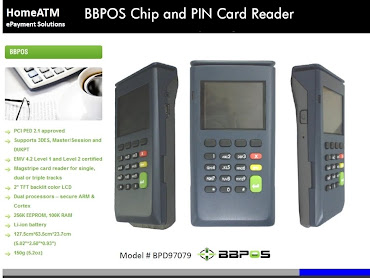
Help your bank eliminate phishing and your customers avoid identity theft by providing them with the ability to stop typing and start swiping. There is no safer way to conduct financial transactions online than by 3DES DUKPT encrypting the cardholder details, which we do at the mag-head "inside the box/outside the browser."

Total Pageviews

SLIM for PC or SmartPhone

SLIM for PC or SmartPhone
Click to Inquire

Chip and PIN eCommerce and Mobile

Chip and PIN eCommerce and Mobile
Click to Inquire

Kapersky Calls for Mass Adoption of Card Readers

Kapersky Calls for Mass Adoption of Card Readers

Translate This Blog

BobCaps

Search ePayment News (example: NFC)

About Me

My photo
Named one of the best Payment Industry News Blogs 4 Years Running

Feedjit

My Zimbio